O My Heart #37: Sri Chinmoy Songs sung by Tanima

Welcome to this series sharing four beautiful songs from Sri Chinmoy’s “O My Heart” collection. Sri Chinmoy wrote thousands of heartfelt songs full of hope, thanks, and inner light. They’re simple melodies that speak straight to your heart, helping you feel calm, peaceful, and a little brighter – whether you’re meditating, relaxing, or just going about your day.

These songs from “O My Heart” carry that gentle, uplifting feeling. Tanima, a longtime student of Sri Chinmoy and one of the early singers in his community, performs them here with real warmth and care. Her gentle, soulful voice makes each song feel alive and easy to connect with.

You can just listen quietly, hum along, or let the melodies play softly in the background — they bring a soft, happy lift to your day.

Featured this time:

Songs

  • Chalre Rabi Bhai
  • Chandika Chandika (1)
  • Chaowa Paowar Kanna Hasi
  • Chaowa Paowar Shesh Habena

Listen & Learn

You can learn by watching the notation while listening, follow along with the melody, or download both the audio and the PDF scores for your personal practice. Everything is available for free, so you can learn at your own pace and enjoy the music more deeply. Use the links below to easily listen to the audio, download the recordings, and view or download the PDF sheet music for your convenience:


Lyrics:

1. Chalre Rabi Bhai

Chalre rabi bhai
Chalre shashi bon
Chalre sabai hriday bane
Nitya anukkhan

Translation:

Come, Sun, my brother dear,
Come, Moon, my sister sweet,
Let us all go into the garden-light
of our oneness-heart.
Let us all live for all Eternity there.

Composed on 1977
– Sri Chinmoy, ‘My Green Adoration-Gifts, Part 2’ songbook


2. Chandika Chandika (1)

Chandika chandika
Mahadev pranadhika
Barabhaya jagamata
Asimata amarata

Translation:

Mother-Power of the cosmos vast,
Dearer than the dearest
Life-consort of Lord Shiva.
Your Compassion, birthless and deathless.
O Mother, Infinity You are,
Immortality You are.

Composed on 1983
– Sri Chinmoy, ‘Consciousness-Sky’ songbook


3. Chaowa Paowar Kanna Hasi

Chaowa paowar kanna hasi
Kothai gela teme
Shanti dhara nimesh hara
Taito elo neme

Translation:

I do not know when the tears of desire
And the smiles of achievements
Have come to an end.
But I do know that
Because they have come to an end,
A sleepless flow of peace
Has descended from Above.

Composed on December 21st, 1979
– Sri Chinmoy, ‘Journey’s Goal, Part 11a’ songbook


4. Chaowa Paowar Shesh Habena

Chaowa paowar shesh habena
Shesh habena
Amar lagi keha amar
Hat dharena

Translation:

There will be no end
To my desire-fulfilment-life.
No compassion-soul holds my hand
To satisfy me in my own way.

Composed on August 27th, 1978
– Sri Chinmoy, ‘Bela Chale Jai’ songbook


For more of Sri Chinmoy’s published songs, visit the official website: www.srichinmoysongs.com.
To learn more about Sri Chinmoy, please visit: www.srichinmoy.org.

© 2026 Sri Chinmoy Centre

Inspiring News #141: Join Seven Minutes of Peace Worldwide

Seven Minutes of Peace on International Day of Peace

Introduction to Seven Minutes of Peace

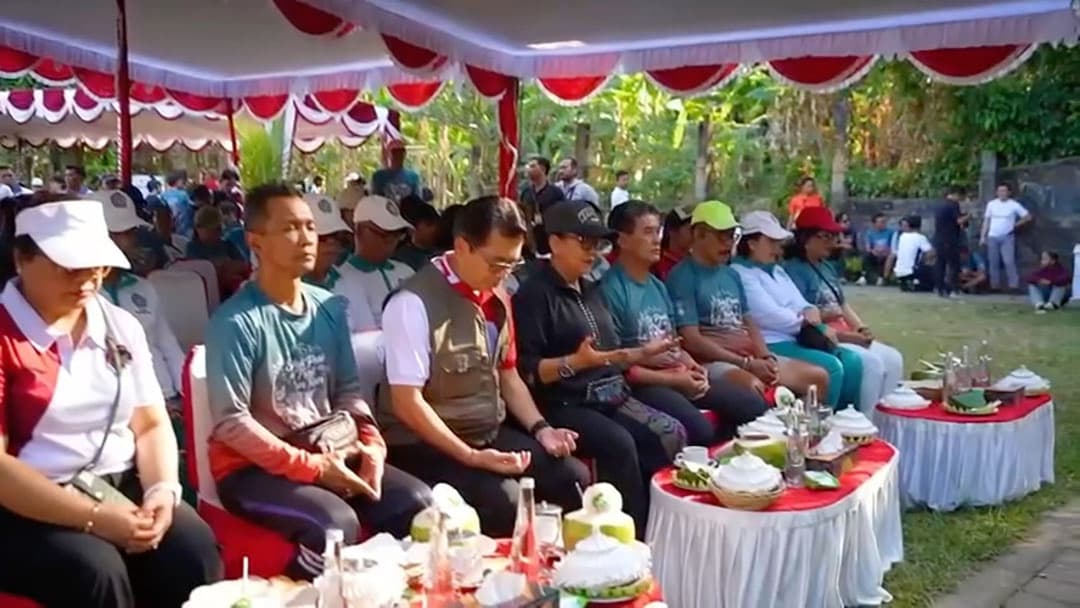
Today, on the International Day of Peace, Sri Chinmoy’s global and simultaneous experience of peace is taking place. From 9:00 to 9:07 AM New York time, people around the world gather inwardly and outwardly to feel the downpour of peace. This simple yet powerful observance invites every peace-lover to pause, meditate and offer their heartfelt aspiration for a more harmonious world.

A Global Invitation

Around the world, the observance can be adjusted to local timeframes and needs. Peace lovers can participate individually or creatively adapt the seven minutes to their own setting. 

The site includes practical suggestions for participation, peace meditation guidance, and a newly added option to receive a reminder.

The Origin of This Global Tradition

This special observance was inaugurated by Sri Chinmoy in 1984 at the United Nations on United Nations Day. As leader of the Peace Meditation at the United Nations, he offered a seven-minute lunchtime meditation that brought staff and delegates together in silence. Over the years it has grown into a worldwide event. In recent times it has been held on September 21, the International Day of Peace, timed to coincide with the spirit of the United Nations Peace Bell ceremony.

Sri Chinmoy’s Vision of Peace

Sri Chinmoy often reminded us that lasting peace begins within each individual. Two of his statements beautifully capture the spirit of today’s gathering:

As there can be no war
Without the war-mongers,
Even so, there can be no peace
Without the peace-lovers.
Sri Chinmoy, Ten Thousand Flower-Flames, Part 48, Agni Press, New York, 1982

Life’s battlefield will be all peace when the sound of the mind
Gives way to the silence of the heart.
Sri Chinmoy, Twenty-Seven Thousand Aspiration-Plants, part 90, Agni Press, New York, 1984

These words invite us not only to wish for peace but to become living instruments of it.

How to Participate

Anyone can join Seven Minutes of Peace:

  • Sit quietly and meditate for seven minutes.
  • Offer a silent prayer for world harmony.
  • Simply hold a sincere feeling of peace in the heart.

There is no requirement of special technique. The power of the observance lies in the collective aspiration of many hearts joining at the same moment.

The Deeper Meaning

Sri Chinmoy described himself as a student of peace. He felt that the most valuable contribution any person can make is the cultivation and sharing of inner peace. When many individuals consciously offer that peace at the same time, something subtle yet real takes place. The atmosphere of the Earth receives a collective gift of light and harmony.

A Continuing Tradition

For more than four decades, this annual observance has brought together people from dozens of countries. Governors, mayors and ordinary citizens have offered proclamations and joined the silence. The tradition continues today with the same sincerity that marked its beginning at the United Nations in 1984.

Final Reflections

On this International Day of Peace, the call is simple and clear: pause, become silent, and offer the peace of your heart to the world. May this collective meditation strengthen the aspiration for harmony in every participant and send a wave of light around the earth.

Explore More 

For more information about events, visit the official website: www.srichinmoycentre.org.
To learn more about Sri Chinmoy, please visit: www.srichinmoy.org.
Video #364: Meditation Dry Period | Spirit Matters #46

Introduction to the Meditation Dry Period

Is the thrill gone from your meditation? Do you feel trapped in the same routines without the peace, clarity and joy you experienced right after your spiritual awakening? You are most likely going through a Meditation Dry Period. These phases are common to almost every sincere seeker, yet many people mistake them for permanent loss of motivation. In this episode of Spirit Matters, Abhinabha and Vajin explore why dry periods happen and, more importantly, how to find your way through them toward deeper spiritual fulfilment.

What a Dry Period Really Feels Like

A dry period is more than a few uninspired sits. It is a stretch of time when meditation feels flat, mechanical or even pointless. The inner connection that once felt alive seems distant. Gratitude fades, complacency creeps in, and the practice that used to nourish the heart starts to feel like a duty. Sri Chinmoy taught that every seeker experiences these phases. Understanding that dryness is a normal part of the journey already removes much of the discouragement.

Why Dry Periods Occur

Dry periods are rarely random. They often result from the gradual accumulation of small mistakes — losing the sense of gratitude, becoming careless with effort, or allowing the outer mind to dominate the practice. The hosts use the helpful image of a dam: many tiny cracks eventually cause a collapse. Recognising the early signs of dryness allows us to repair those cracks before the practice becomes completely arid.

The Danger of Quitting Too Soon

One of the greatest risks during a Meditation Dry Period is the belief that the motivation has disappeared forever. Many people abandon their practice at this stage, thinking the earlier joy was only temporary. In reality, dryness is often a tunnel rather than a dead end. Knowing how to navigate it can transform a difficult phase into a period of deeper roots and stronger aspiration.

Four Practical Ways to Overcome Dryness

Drawing on Sri Chinmoy’s teachings and their own long experience, Abhinabha and Vajin offer four clear and heart-centred approaches:

1. Read spiritually charged books

Sacred literature has a unique power to rekindle devotion. Biographies of saints, first-person spiritual narratives and the writings of realised teachers can awaken the heart when meditation itself feels dry. The hosts share personal recommendations, including works by Sri Chinmoy, Paramahansa Yogananda and Sri Ramakrishna, and explain why certain books act like living companions during empty periods.

2. Mix with spiritual people

Consciousness is contagious. Spending time with fellow seekers — whether in group meditation, singing or simple heartfelt conversation — can lift the atmosphere of the inner life. Community provides both encouragement and a mirror that helps us see our own state more clearly. Even short, regular contact with a spiritual environment can interrupt the isolation that often deepens dryness.

3. Repeat sacred names (japa)

When formal meditation feels heavy, the simple repetition of a mantra or sacred name can keep the inner connection alive. Mantras work even when the mind is restless or the heart feels closed. The hosts discuss both traditional mantras and the possibility of finding a short English phrase that resonates personally. Consistent japa gently realigns the consciousness with the spiritual current.

4. Keep a spiritual diary

Writing honestly about one’s inner state — the struggles, the small insights, the moments of gratitude — creates a record that reveals progress even when it is not felt day to day. A diary also serves as a weekly check-in with one’s own conscience, helping the seeker stay aligned with the soul’s deeper longing.

Deepening the Inner Relationship

At the heart of every practical suggestion lies one essential truth: meditation is a relationship with the soul, the Inner Pilot, the Divine within. When that relationship is neglected, dryness naturally follows. When it is consciously renewed — through reading, community, mantra or honest self-reflection — the practice begins to regain its living quality. Devotion, even in its simplest forms, is one of the most effective protections against prolonged dryness.

Why These Phases Can Last Longer Than Expected

Dry periods sometimes continue far longer than we hope. The mind may interpret the length as proof that something is wrong. In reality, longer phases often prepare the ground for a more mature and stable aspiration. The episode encourages patience and steady effort rather than dramatic attempts to force inspiration to return.

Previous Episodes in the Spirit Matters Series

This episode continues the rich tradition of practical spirituality offered by Spirit Matters. Explore more transformative conversations:

Final Reflections

A Meditation Dry Period is not a sign of failure. It is a natural and often necessary part of the spiritual journey. By understanding its causes and applying simple, heart-centred remedies, every seeker can move through the desert and rediscover the oasis of peace, clarity and joy that first inspired the path. This episode of Spirit Matters offers both honest diagnosis and practical hope for anyone currently walking through dryness.

Explore More 

For more information about events, visit the official website: www.srichinmoycentre.org.
To learn more about Sri Chinmoy, please visit: www.srichinmoy.org.

I Love Singing #268: Sri Chinmoy Songs sung by Purnakama

This week features four uplifting Sri Chinmoy Bengali and English songs from the ‘Your Face Is My Dream’ songbook. Over the years, Sri Chinmoy composed music filled with aspiration and gratitude, creating heartfelt melodies that gently illuminate his spiritual path. Because of their simplicity and warmth, the songs continue to speak directly to the inner heart. Additionally, they offer listeners a peaceful doorway into his meditative world.

The performances this week come from his disciple Purnakama, whose sincere and gentle voice brings out the devotional sweetness in every line. Through her recordings, it becomes easy to settle into a calm, meditative mood and appreciate the purity of the music. As a result, whether you choose to sing along or simply listen quietly, these Sri Chinmoy Bengali and English songs can add a soft, elevating joy to your week.

Below are the six songs featured in this week’s selection:

Songs

  • Eso Eso Baso Baso Amar Hiyar Bagane
  • O, Come, Come
  • Dayamayi Daya Kare Jeona Aji
  • O Mother of Compassion

Listen & Learn

You can learn by watching the notation while listening, follow along with the melody, or download both the audio and the PDF scores for your personal practice. Everything is available for free, so you can learn at your own pace and enjoy the music more deeply. Use the links below to easily listen to the audio, download the recordings, and view or download the PDF sheet music for your convenience:


Lyrics:

1. Eso Eso Baso Baso Amar Hiyar Bagane

Eso eso baso baso
Amar hiyar bagane

Translation:

O, come, come,
Sit down in my heart-garden.

Composed on June 8, 1996
– Sri Chinmoy, ‘Your Face Is My Dream’ songbook


2. O, Come, Come

O, come, come,
Sit down in my heart-garden.

Composed on June 8, 1996
– Sri Chinmoy, ‘Your Face Is My Dream’ songbook


3. Dayamayi Daya Kare Jeona Aji

Dayamayi daya kare jeona aji

Translation:

O Mother of Compassion.
Do not leave me today.

Composed on June 8, 1996
– Sri Chinmoy, ‘Your Face Is My Dream’ songbook


4. O Mother of Compassion

O Mother of Compassion.
Do not leave me today.

Composed on June 8, 1996
– Sri Chinmoy, ‘Your Face Is My Dream’ songbook


For more of Sri Chinmoy’s published songs, visit the official website: www.srichinmoysongs.com.
To learn more about Sri Chinmoy, please visit: www.srichinmoy.org.

© 2026 Sri Chinmoy Centre

Inspiring News #140: Beautiful Sri Chinmoy Marathon at Rockland Lake

Sri Chinmoy Marathon

Introduction to the Sri Chinmoy Marathon at Rockland Lake

The 24th annual Sri Chinmoy Marathon took place on Monday, August 24, 2026, around the beautiful shores of Rockland Lake in Congers, New York. This popular Boston Qualifier drew runners from many countries to the scenic, pancake-flat course just 45 minutes north of New York City. Marathon photos are now available, along with the complete official results.

A Scenic and Fast Course

The Rockland Lake Marathon is known for its exceptionally flat and fast course. Runners complete a USATF-certified 2.95-mile loop around the lake. The marathon consists of one partial starting lap followed by eight full loops, creating a smooth and enjoyable race experience. The path was repaved in 2020 and remains free of potholes and cracks, making it ideal for personal bests and Boston Marathon qualification.

Photo Galleries & Official Results

Because so many excellent photographs were taken on race day, the organisers created two separate galleries:

These galleries capture the energy of the start, the determination of runners on the course, the joy at the finish line, and the awards ceremony.

Previous Editions and Related Events

The Sri Chinmoy Marathon Team organises many races at Rockland Lake throughout the year, including the 12-Hour and 24-Hour races, the Midnight Marathon and half-marathons. Previous results and photo galleries from earlier editions of the marathon can be found on the official website:

A Well-Organised Event

The Sri Chinmoy Marathon Team, in cooperation with the New York State Parks System, once again provided excellent race support. Premium aid stations were available every mile, custom medals were awarded to all finishers, and a post-race vegetarian meal was served. Free parking (for early arrivals), full medical support and a friendly atmosphere made the day enjoyable for both runners and volunteers.

International Participation

As in previous years, the race attracted an international field of runners from more than 30 countries. The combination of a fast course, beautiful lakeside scenery and the welcoming spirit of the Sri Chinmoy Marathon Team continues to make this event a favourite among both local and visiting athletes.

Supporting a Greater Cause

All proceeds from the Rockland Lake Marathon support the Self-Transcendence 3100 Mile Race — the world’s longest certified road race. By participating, runners not only challenge themselves but also help sustain one of the most remarkable ultrarunning events on the planet.

Course Records and History

The men’s course record stands at 2:30:32 (Bahadur Szabo, Hungary, 2005). The women’s course record is 2:37:24 (Annie Heffernan, USA, 2023). Over the years the Rockland Lake Marathon has become a reliable Boston Qualifier and a highlight of the late-summer running calendar in the New York area.

Atmosphere and Community

Runners often comment on the peaceful yet focused atmosphere of the Rockland Lake Marathon. The combination of natural beauty, well-organised support and the underlying philosophy of self-transcendence creates a special experience. Many participants return year after year, drawn by both the fast course and the sense of community.

Final Reflections

The 24th annual Sri Chinmoy Marathon at Rockland Lake once again showed why this race holds a special place in the New York running calendar. Flat, fast, scenic and well-supported, it continues to attract runners seeking both performance and inspiration. We congratulate all the finishers and thank the many volunteers who made the day possible.

Explore More

For more information about sports events, visit the official website: www.srichinmoyraces.org.
To learn more about Sri Chinmoy, please visit: www.srichinmoy.org.